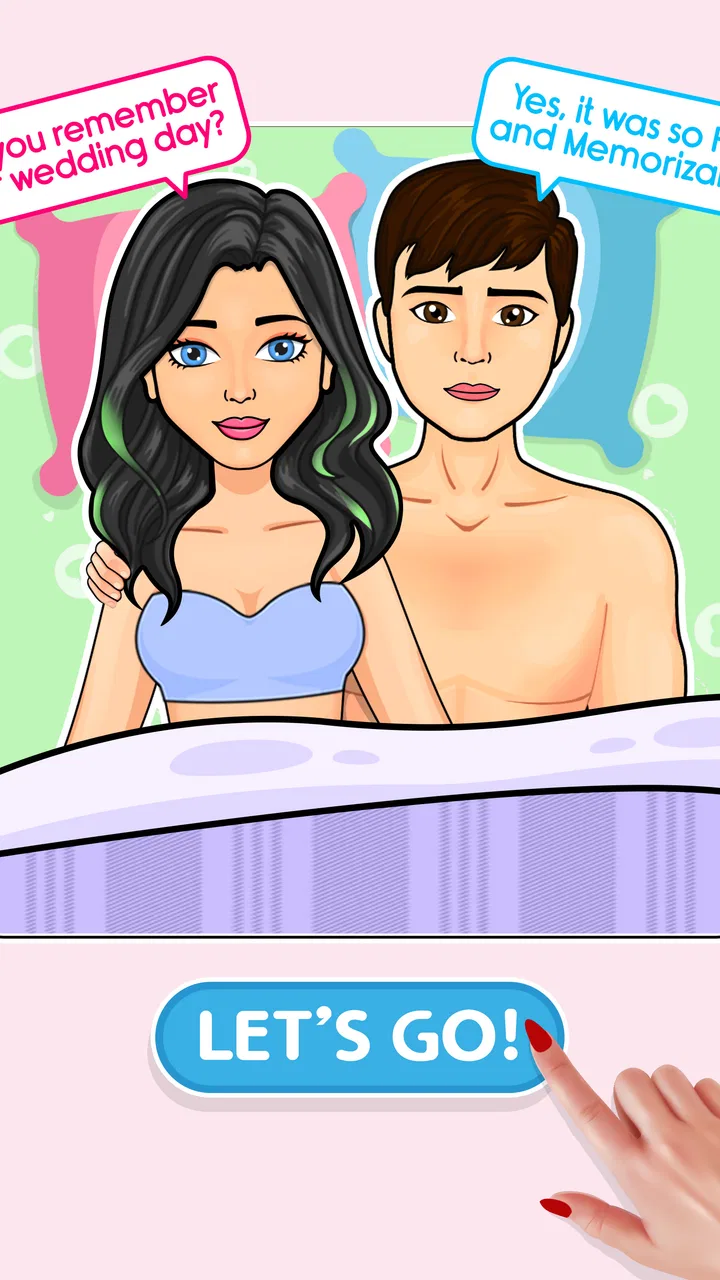
Sticker Doll DIY Dressup Diary
- 3.7
- Rating
- 10.00M
- Installs
- Free
- Price

 Analysis by App-foxy
Sticker Doll DIY Dressup Diary is a role-playing dress-up game built around the simple pleasure of making a paper-style character look exactly the way I want. I found it easy to understand at first glance: choose a doll, work through the available fashion and sticker-style choices, and gradually turn a plain college-inspired look into something with personality. It is free to download, aimed at Everyone, and made by The Fashion Valley, so it is clearly positioned as a casual, accessible experience rather than a demanding role-playing adventure.
What makes it appealing is the small creative decision behind every outfit. I am not trying to win a battle or master complicated controls. I am deciding whether a particular top works with a hairstyle, whether the colors feel right together, and whether the final character looks relaxed, polished, playful, or deliberately over-the-top. That makes it a comfortable choice for short sessions, especially when I want something visual and low-pressure.
The game has reached over ten million installs and holds a 4.1 average from around ten thousand ratings, which suggests that its basic idea connects with a fairly broad audience. I would still approach it with the right expectations: this is a focused dress-up role-playing game, not a full life simulator or a deep story-driven RPG. Its enjoyment comes from styling and presentation, not from complex progression systems.
You May Also Like

 Blood Strike: 2.5 Anniversary
Blood Strike’s Loadouts Turn Every Drop Into a Tactical Gamble
A close look at Blood Strike’s custom loadouts: how fast access to signature weapons reshapes its battle royale rhythm, rewards preparation, and narrows the gap between fights.

 Pandora - Music & Podcasts
Pandora’s Music Is Easy to Start, but Harder to Recover
Pandora’s strength is its low-effort path from a seed to a station. Its weak spot is how much confidence it asks you to place in connection, setup, and quiet recovery.

 8 Ball Pool
 Is Built on Rivalries, Rematches, and Routine
A close look at the rivalries, rematches, shared routines, and unanswered safety questions that turn a quick pool match into a persistent mobile community.

 Samsung Music
’s Quiet Strength Is Playing What You Already Own
Its reach comes less from spectacle than from dependable access to a personal library. That simplicity is both the app’s strongest retention engine and its ceiling.

 AccuWeather: Weather Radar
AccuWeather Review: A Quick, Clear Forecast for Everyday Decisions
For everyday plans, the best forecast is the one you can understand quickly. AccuWeather makes rain timing, radar, and local conditions easy to act on, with a few trade-offs.

 Hill Climb Racing
Why Hill Climb Racing Still Turns Crashes Into One More Run
A tiny car, a bumpy hill and one more upgrade: Hill Climb Racing keeps resurfacing because its simple chaos makes every near-miss feel personal.
More From Our News Desk
View All News


What the first session feels like
When I first opened the game, the most useful mindset was to treat it like a digital paper-doll activity. The store summary talks about creating a college look, and that theme gives the styling a recognizable direction. Instead of throwing a huge world at me, the game keeps attention on the character and the choices around her appearance. That narrow focus is helpful for a first-time player because I can start experimenting almost immediately.
The visual concept also makes the game feel more approachable than many role-playing titles. There is no need to learn a long list of commands before doing anything interesting. The central loop is familiar even if I have never played this particular title: look at the current doll, consider the available visual options, and assemble a combination that feels coherent. The reward is the finished look itself and the satisfaction of seeing a basic character become more expressive.
I would recommend it most to players who enjoy avatar customization, sticker books, fashion games, and light creative activities. It can also work well for younger players because the content rating is Everyone and the tone is harmless. Adults who like relaxing mobile games may enjoy it too, although anyone expecting detailed fashion simulation should keep the simpler paper-doll presentation in mind.
My first practical tip is not to rush through the choices just to complete a look. I got more enjoyment by deciding on a general mood first. For example, I might begin with a casual student style, then choose pieces that support that idea instead of selecting every item independently. This makes the result feel intentional and helps avoid the common beginner problem of creating an outfit that contains attractive pieces but does not look unified.
Getting oriented without overthinking it
The opening experience is best handled as a short visual tour. I recommend tapping through the main styling areas slowly and noticing what changes on the doll after each selection. This matters because dress-up games often make the interface feel obvious while hiding the difference between choosing an item, confirming it, and moving to another part of the look. Taking a minute to observe the response prevents unnecessary repeated taps.
I also found it useful to separate the outfit into broad decisions. Start with the main clothing shape, then think about hair or other visible styling details, and only afterward consider smaller decorative choices. That order gives the character a foundation. If I begin with tiny accents, I can lose sight of the overall silhouette and end up changing everything repeatedly.
Because the game is free, a new player may also wonder whether spending is necessary to understand it. The listed in-app purchases range from $0.99 to $5.99 per item, but I would not treat payment as part of the basic learning process. First-time players should explore the free experience and decide whether the styling loop is enjoyable before considering optional purchases. That is a better approach than paying early and discovering that the game’s relaxed format is not what they wanted.
The current version is 0.0.21, and the minimum operating system is Android 8.0. In practical terms, that makes it relevant to many older Android devices, although the experience will naturally depend on the phone or tablet itself. Before installing, I would check that the device meets that system requirement and leave enough room for a comfortable app experience rather than assuming every older handset will feel equally smooth.
Your first meaningful success
For me, the first meaningful success in Sticker Doll DIY Dressup Diary is not simply opening the game. It is finishing one complete look that feels deliberate. I suggest choosing a simple theme such as “first day on campus” or “comfortable weekend,” then sticking with it for the entire styling attempt. This gives the first session a clear purpose and turns random tapping into a small creative task.
Begin with the most noticeable clothing choice. Once that is in place, look for a hairstyle and supporting details that do not compete with it. If the main outfit is already visually busy, a quieter supporting choice may make the character easier to read. If the clothing is plain, a stronger accent can give the final result more energy. This is a small but useful styling principle, and it works particularly well in a game where the character is presented as a compact paper-doll design.
After completing the look, pause before changing it. I found that the first result often looks better after a moment of distance because I can judge the whole character rather than focusing on the last item I selected. This is also a good way to decide whether I really want to spend time unlocking or trying additional options. If the basic combination already feels satisfying, the game is doing its job without needing a long session.
A second useful habit is to remember combinations that work rather than trying to collect every possible variation immediately. I might mentally note that a certain clothing shape works with a particular color direction, then use that as a starting point later. This makes future sessions faster and more creative. Instead of rebuilding from zero, I can refine one idea and see how a different detail changes the mood.
Where new players may feel confused
The biggest possible source of confusion is knowing what counts as progress. In a conventional role-playing game, progress usually means levels, missions, equipment, or story chapters. Here, the meaningful progress is more personal: I become better at putting together a look and more familiar with the available styling choices. If I expect a traditional quest structure, the game may seem limited. If I expect a visual customization activity, its purpose becomes much clearer.
Another point to understand is that not every attractive item belongs in the same outfit. A piece can look appealing on its own and still make the overall character feel unbalanced. I recommend judging the complete doll after each major change instead of selecting items because they are individually eye-catching. The game rewards visual restraint as much as decoration, especially when several strong elements appear together.
Players may also wonder why a chosen style does not immediately feel “finished.” In my experience, the answer is often proportion and emphasis rather than a missing feature. If the outfit already has a strong focal point, adding more visual noise can weaken it. Try removing or replacing one element before adding another. That simple subtraction test is one of the most reliable ways to improve a paper-doll design.
The purchase system is another area where a first-time player should stay observant. Since individual items can cost between $0.99 and $5.99, it is worth checking what is being selected before confirming a transaction. I would treat paid choices as optional additions for someone who already enjoys the core game, not as a shortcut required to make the first successful outfit. This keeps the early experience low-pressure and helps separate genuine interest from impulse spending.
How it compares with other mobile dress-up games
Compared with a full fashion simulator, this game feels lighter and more immediate. A simulator may offer longer-term wardrobe management, detailed character statistics, or a stronger sense of progression. Sticker Doll DIY Dressup Diary is better suited to a quick styling session where the visual result matters more than managing a large fashion project. If I want to make one character look appealing in a few minutes, its simplicity is an advantage.
Compared with a story-heavy role-playing game, it offers much less narrative pressure. There is no need for me to remember a complicated plot before I can enjoy the session. That makes it a good choice for a break, a quiet evening, or a moment when I want a creative activity without combat, timed challenges, or strategic planning. On the other hand, players who need strong storytelling or a sense of adventure may find the experience too narrow.
It also differs from a basic avatar creator because the college-inspired theme gives the styling a more specific identity. I am not merely building an abstract profile picture; I am shaping a character around a recognizable everyday setting. That can make decisions easier because the outfit has a context. The trade-off is that someone looking for fantasy costumes, realistic wardrobe planning, or a broad range of unrelated themes may prefer another type of dress-up game.
One non-obvious strength is how useful the focused theme can be for learning visual coordination. Because the game centers on a familiar college look, I can practice balancing casual pieces, color accents, and personality without being distracted by an enormous catalog of unrelated ideas. It is almost like a small styling exercise. That makes it suitable for a player who enjoys making several versions of the same basic concept rather than constantly changing worlds.
Small workflows that make styling more enjoyable
My favorite workflow is the “base, contrast, cleanup” method. First I create a base outfit with a clear overall shape. Then I add one contrasting detail to keep the character from looking flat. Finally, I remove or soften anything that competes with the main idea. This approach is more reliable than tapping through every option in sequence, and it gives each session a beginning, middle, and end.
A second workflow is to create variations instead of searching for one perfect result. I might make a comfortable version, a more polished version, and a playful version using the same general direction. This is especially useful when I am unsure which choices I prefer. Comparing variations teaches me more about the game’s visual language than repeatedly changing one item without a plan.
I also recommend using the first outfit as a reference point. After finishing it, change only one major element and look again. If I replace the hairstyle, I can see whether the character’s personality changes. If I alter the main clothing choice, I can judge whether the supporting details still work. This controlled approach makes the styling process feel less random and is a practical way to discover personal preferences.
These methods reveal a trade-off at the heart of the game. The limited, focused format makes it welcoming, but it also means the experience depends heavily on whether I enjoy visual experimentation. There is no complicated system to carry the session when I am not interested in styling. For that reason, the game is strongest when I want to create, compare, and refine rather than simply consume content.
Who should try it, and who should skip it
I think it is a good fit for someone who wants a gentle paper-doll customization experience with a student-life flavor. It is also a sensible recommendation for a child or family member who prefers visual play and does not need an intense challenge. The Everyone rating supports that broad accessibility, while the free price makes trying the basic experience straightforward.
It may also suit players who enjoy sharing style ideas informally with friends, even if they never consider themselves fashion experts. A finished character can act as a conversation starter: one person can create a casual look, another can try a more expressive version, and both can compare the choices. The game’s value here is not competition but the ease of turning a vague idea into a visible character.
I would skip it if my main goal were a deep RPG with quests, combat, strategic builds, or a large narrative. I would also look elsewhere if I wanted a professional wardrobe planner or highly realistic clothing coordination. The title presents itself as a sticker-doll dress-up experience, and that is exactly where it works best. Expecting it to become a different genre will only make its simplicity feel like a flaw.
Players who dislike optional purchase prompts should be especially deliberate. The game can be tried without making a purchase, but the presence of item prices means I would keep confirmation habits in place, particularly on a shared device. That is not a reason to reject the game outright; it is simply part of using a free mobile title responsibly.
My recommendation after spending time with it
Sticker Doll DIY Dressup Diary succeeds because it understands the appeal of a small, focused creative loop. I can open it, make a character look different, and finish a satisfying styling idea without committing to a long campaign. The college theme gives the choices a little more direction than a completely open-ended avatar editor, while the paper-doll presentation keeps the tone friendly and uncomplicated.
The most important advice I can give a first-time player is to define a look before searching for items. Pick a mood, establish a main clothing choice, add one supporting contrast, and then stop to judge the whole character. That process gets me to a meaningful result faster than random selection, and it makes the game feel more like styling than browsing.
With a 4.1 average from around ten thousand ratings and over ten million installs, it has clearly found an audience for this kind of casual role-playing play. The Fashion Valley keeps the concept accessible, and the free entry point makes it easy to see whether the format suits you. I would recommend it to anyone who enjoys creative dress-up games and wants a relaxed activity for short sessions. I would not recommend it as a substitute for a story-rich RPG, a serious fashion tool, or a game built around demanding progression.
For me, the final verdict is positive but specific: this is a pleasant styling playground, not an all-purpose role-playing game. If making a paper doll feel distinct sounds satisfying, the first successful outfit arrives quickly and the low-pressure format is easy to appreciate. If you need constant action or a large adventure beyond the character’s look, the experience will probably feel too limited. The current release, version 0.0.21, is worth trying on a compatible device, provided you approach it for its visual creativity rather than expecting a deeper system underneath.
FAQs for Sticker Doll DIY Dressup Diary
01What is Sticker Doll DIY Dressup Diary about?
Sticker Doll DIY Dressup Diary is a creative app that allows users to design and dress up virtual dolls using a variety of stickers, outfits, and accessories. It offers a fun and interactive platform for fashion enthusiasts to explore their style and creativity without any limitations. The app provides a user-friendly interface that makes the dressing-up experience enjoyable and engaging for all ages.
02Is Sticker Doll DIY Dressup Diary free to use?
Yes, Sticker Doll DIY Dressup Diary is free to download and use. However, it offers in-app purchases that allow users to access premium outfits, accessories, and additional features. These purchases are optional, and the app provides plenty of free content to keep users engaged without spending money.
03What age group is Sticker Doll DIY Dressup Diary suitable for?
Sticker Doll DIY Dressup Diary is designed for users of all ages, but it is particularly popular among children and teenagers. The app's simple interface and creative features make it accessible and enjoyable for younger audiences, while older users can appreciate the extensive customization options available for their virtual dolls.
04Can I share my designs from Sticker Doll DIY Dressup Diary on social media?
Yes, Sticker Doll DIY Dressup Diary allows users to share their creations on various social media platforms. The app includes built-in sharing features that make it easy to showcase your unique designs with friends and followers. This feature enhances the community aspect of the app, allowing users to gain inspiration from each other.
05Does Sticker Doll DIY Dressup Diary require an internet connection?
Sticker Doll DIY Dressup Diary can be used offline for basic features, such as designing and dressing up dolls. However, an internet connection is required for downloading new content, accessing premium features, and sharing your creations on social media. For the best experience, it is recommended to have an active internet connection while using the app.
Pros
- Intuitive and easy-to-use interface.
- Wide variety of outfits and accessories.
- High-quality graphics and animations.
- Regular updates with new content.
- No intrusive ads during gameplay.
Cons
- Limited free content availability.
- In-app purchases can be costly.
- Requires internet for full features.
- Some features locked behind paywall.
- Occasional app crashes reported.

Sticker Doll DIY Dressup Diary
Gallery